
Roller Flour Mill
Roller Flour Mill
At a Glance
- Industry: Food products manufacturing
- Setting: A multi-company group in eastern India
- Scope: Six companies, one unified system
- In brief: Six disconnected systems and manual consolidation replaced by one real-time platform. Live and relied on for six years.
The Situation
A multi-company food products group in eastern India came to us running six separate companies on six separate systems. Finance was managed company by company, and nothing connected the six. To see the group as a whole, people pulled numbers out of six systems and consolidated them by hand in spreadsheets, after the fact. Top management was reading its own business through reconstructed aggregations.
The sharpest operational pain was in materials. Raw material procurement in this trade carries deduction calculations on every purchase, for bad quality, quantity shortfall, rain-affected damage, freight, and broker’s commission. The old software handled none of it. Production was managed on paper, with no reliable way to know actual output from each process. What they asked us for was consolidation. They had not asked for a unified system.
What We Found
Two findings shaped everything. The first was architectural. They asked us to solve consolidation, and the straightforward reading would have been to build a reporting layer on top of six systems. We proposed the opposite: build one unified system, so consolidation happens in real time and the problem simply disappears. The reason they had a consolidation problem was not that consolidation was hard. It was that they had six systems. Remove the six, and the problem is gone. They had asked us to solve the symptom. We proposed solving the structure. Most of what decides whether software works is decided before the build begins.
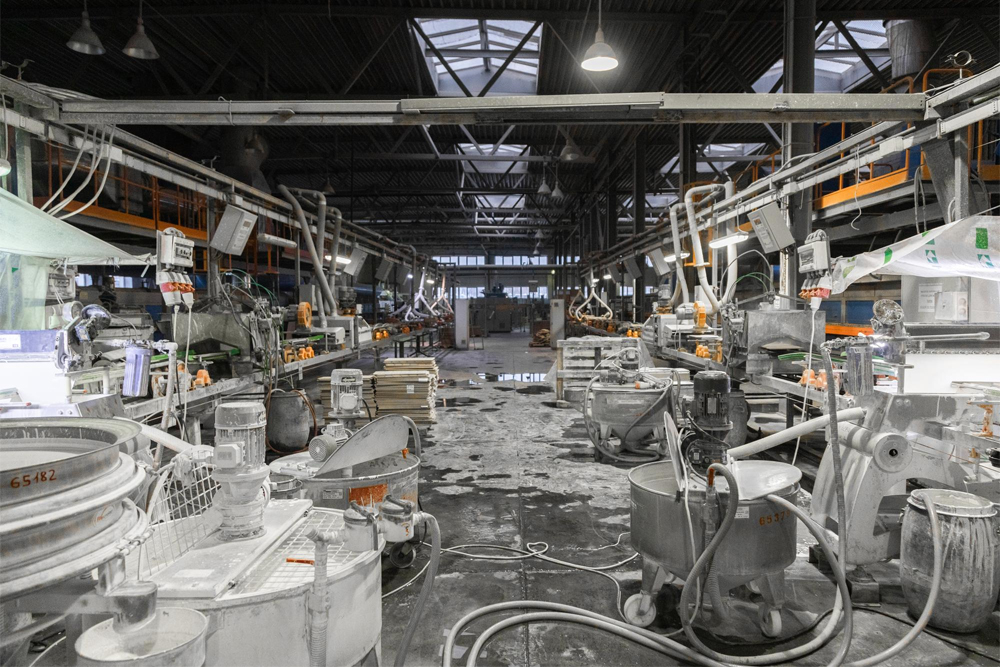
The second finding made the unified system buildable. The commercial side of all six companies was the same: purchase, sales, finance, payroll, compliance, reporting. What differed was production, because the group’s different food categories are made by genuinely different processes. So we built one commercial core and separate production modules, and linked each to the right companies. That is what let one system honor the real differences between the businesses without forcing them into a single mold.
And one detail shows what fit means here. Procurement in this trade carries five deduction factors on every purchase, including rain-affected damage, a category that exists because the harvest is exposed to the monsoon. No off-the-shelf system knows that category exists.
The Build
Because finance and management were centralized in one place, we started across all six companies at once, which avoided the coordination problems that usually slow multi-company rollouts. From order to go-live was roughly seven months. We did not tear up how the group did business. It was a well-run house with a working way of operating, and we refined that rather than replacing it. The first phase went in with no scope changes.
The Outcome
Six years on, the group still runs on the same system, under an active maintenance contract.
- Six disconnected systems replaced by one real-time cloud platform, so the manual spreadsheet consolidation is gone and the numbers agree because they come from one place
- All five procurement deductions, including rain-affected, calculated automatically on every purchase
- Paper-based production replaced by process-level control with real output visibility
- Consolidated accounts, receivables and payables, and an approval workflow on every payment across the group
- Real-time business intelligence for top management, in place of reconstructed spreadsheets
With visibility and control in one place, the path from order to delivery to payment shortened and costs came down, while cleaner data and reporting supported more orders and revenue. Order-to-cash time reduced by roughly [~ __%, confirm ].
The proof is the architecture holding. Six years of continuous operation say the call made in discovery, that six companies did not need six systems, was the right one.
Let's Start With a Conversation
If you run a manufacturing business and any of this feels familiar, the next step is a conversation, not a pitch.